Farm & Ranch Fence Installation in Bristol, TN
Field fence, barbed wire, hi-tensile, board, and pipe-and-cable for working farms and hobby acreage across Sullivan County and the Tri-Cities.
Request Your Free Estimate (423) 251-8448Farm & Ranch Fence in Bristol, TN
Bristol Fence Builders installs farm and ranch fencing across Bristol, TN and the rural pockets of Sullivan, Washington, Carter, and the Virginia side counties. Cattle, horses, sheep, goats, hay ground, hobby farms — we run field fence, barbed wire, hi-tensile, board fence, and pipe-and-cable on every kind of terrain Appalachia throws at us. Locust corners, proper H-brace assemblies, gates sized for the equipment you actually own. Call for a free walk of the property and a flat written quote.
Field Fence and Barbed Wire
For working cattle pastures and most general perimeter work around Bristol, woven-wire field fence and four or five-strand barbed wire are still the standard. We install Class 3 galvanized field fence — usually 949-12-11 or 1047-12-11 for cattle, 8-line goat-and-sheep fence where small stock are involved — on treated, locust, or cedar posts spaced according to terrain. Barbed wire goes on the perimeters and along the laneways, two-point or four-point depending on the stock and the neighbor. Every corner gets a proper H-brace assembly with the diagonal in compression — not the half-corners you see thrown together on weekend jobs that pull loose the first time a steer leans on the wire.


Get Your Free Estimate
Limited Slots Available This Month!
Board Fence and Hi-Tensile
Horse properties around the Tri-Cities run on three- and four-board oak or pine fence, painted black or white, with hi-tensile or coated wire on the inside line to keep horses off the boards. We dado the boards into the posts when budget allows or face-nail with hot-dipped fasteners when speed matters more — either way, the corners get braced and the line stays straight. For larger horse and cattle operations, hi-tensile smooth wire on insulated post systems delivers the same containment as woven-wire at a fraction of the material cost, with electric chargers sized for the run length and the soil moisture. We install solar and AC chargers, ground rods sized for our dry summer soil, and gate handles that don't shock the operator.
Pipe-and-Cable, Continuous Fence, and Heavy Stock Work
Where the stock is big enough to test wire — bulls, heavy cattle, working horse facilities, sale-barn pens — we move to pipe-and-cable or continuous panel fence. Pipe corners and gates welded in-house, cable strung tight with proper turnbuckles, and continuous panel pinned together for the kind of perimeter that doesn't move when an animal leans on it. We also install loading chutes, working pens, gates wide enough for a sixteen-foot trailer, and pasture cross-fencing for rotational grazing. Locust or treated wood for corners where you want the look, schedule-40 pipe where you want the strength — sized to what the property actually does, not what looks good in a catalog.
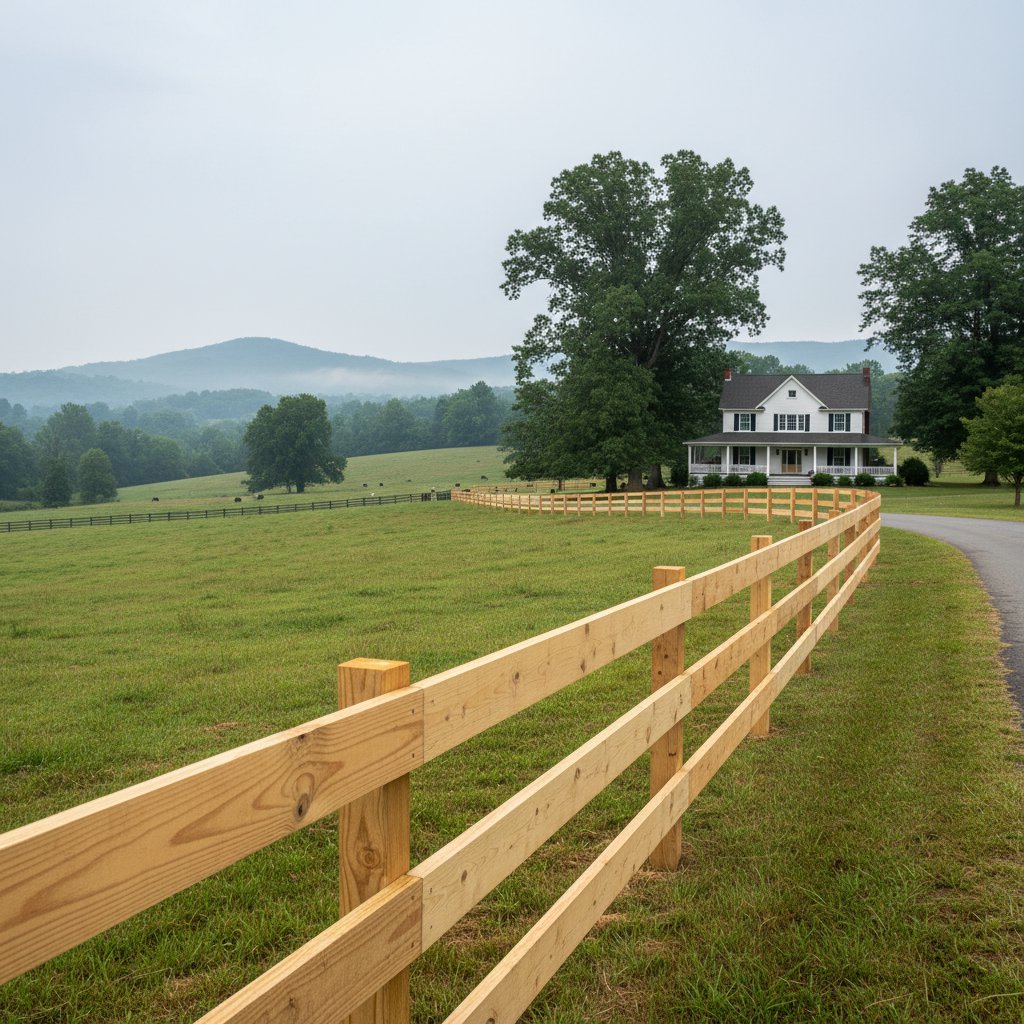
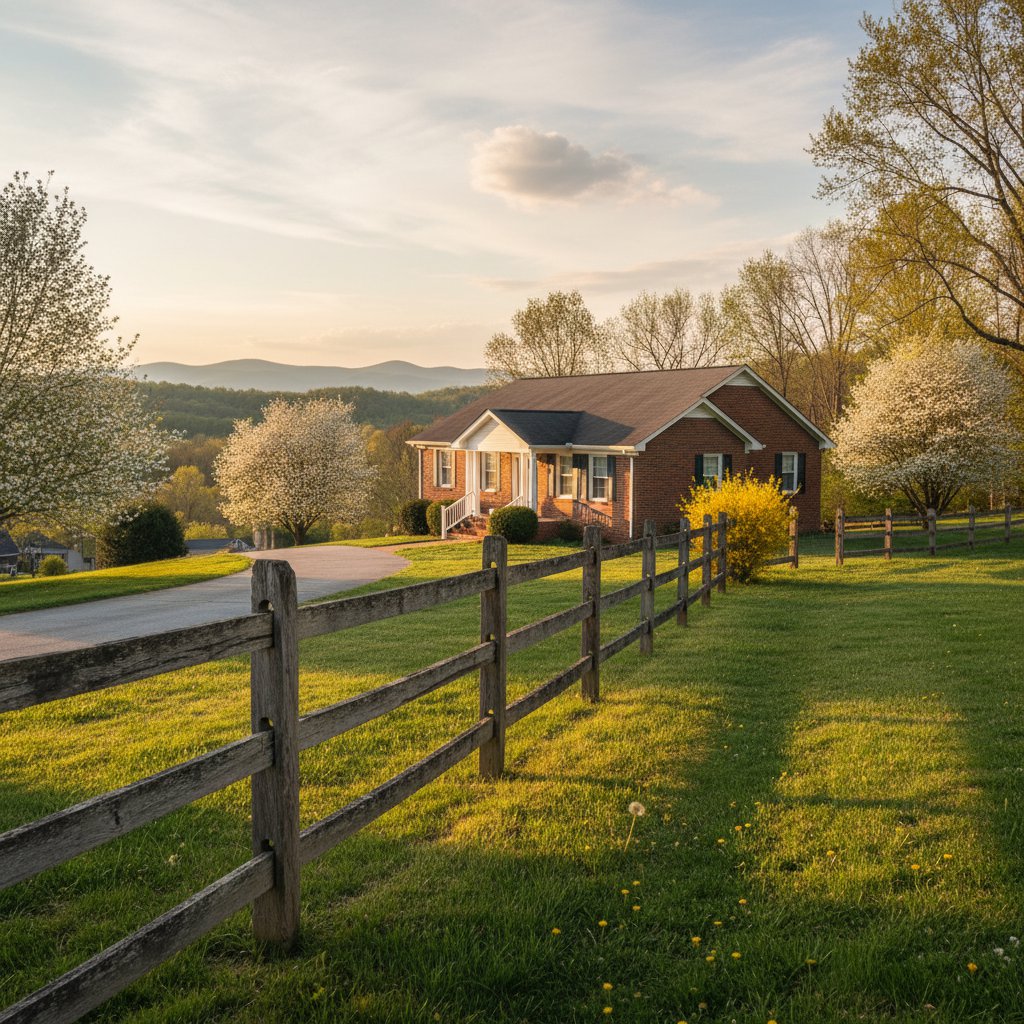
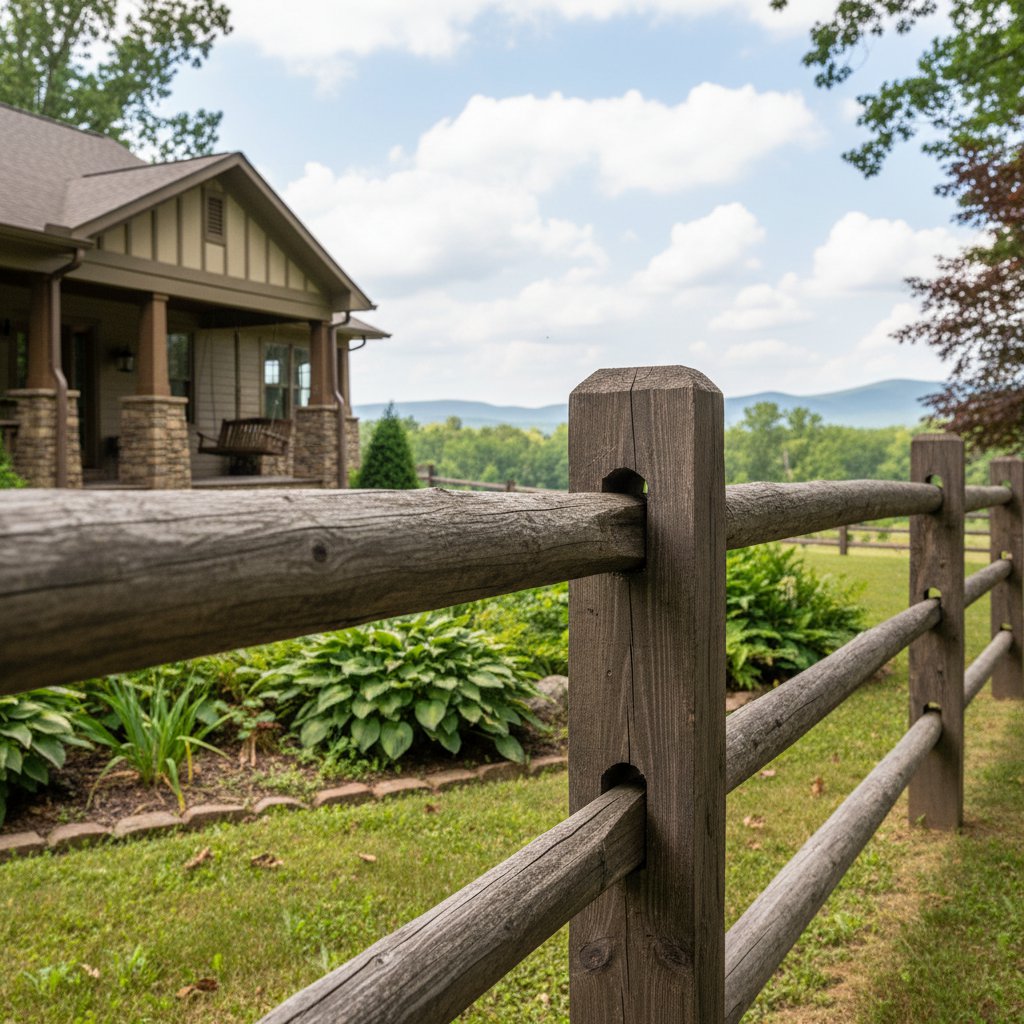
Recent Farm and Ranch Installations
Signs Your Farm Fence Needs Work
Working fence fails in predictable patterns. Here's what to watch for on a walk of the property.
Loose or Sagging Wire
Wire that's lost tension lets stock push through, drift along the line, and eventually break out. Most runs can be re-tensioned at the brace assemblies if the fabric itself is still sound.
Rotted or Pushed Corner Posts
Corners take the full load of every line. A pushed or rotted corner means the brace assembly has given up — the rest of the fence is on borrowed time until it gets rebuilt.
Sagging Gates
Wide farm gates sag from their own weight if the hinge post isn't deep enough or the brace isn't right. A dragging gate is annoying once a day for you and a daily escape attempt for the stock.
Wash-Outs Under the Wire
Heavy rain and the spring runoff cut channels under fence lines, especially along the creek bottoms and drainage swales. Stock find these fast. The fix is grading, rip-rap, or a low-strand of wire below the fabric.
Our Farm Fence Installation Process
Working fence projects start with a walk of the property and end with a fence the stock respects.
Property Walk
We meet on-site, walk the perimeter or the cross-fence line with you, look at the terrain, the stock, the soil, and the water crossings. Material recommendations and a written per-foot quote follow within the week.
Layout and Clearing
Once the job's booked, we mark the line, clear brush and small trees where needed, and stake out the corners and gates. Big trees stay — we work around them. Heavy clearing gets bid separately if the line is overgrown.
Corners and Posts
Corners, gate posts, and brace assemblies go in first — set deep, plumbed, and braced before any line wire goes up. Line posts follow on the spacing the terrain calls for, deeper on the rises, closer-spaced through low spots and gate approaches.
Wire, Gates, and Walk-Through
Fabric, barbed wire, or pipe-and-cable goes up to spec, tensioned at the corners and stapled or clipped along every post. Gates hang last, sized for your equipment and counterbalanced for smooth swing. We walk the finished fence with you before we pull off the property.
What Our Clients Say
"Cedar privacy fence on a sloped lot off Volunteer Parkway, and the ground turned to shale about a foot down. Their crew brought the right gear, cored the post holes clean, and the line ran dead straight up the grade. Came through last winter's ice storm without a leaner."

Ready to Fence Your Acreage?
Call Bristol Fence Builders at (423) 251-8448 or fill out the form for a free on-site walk and a flat per-foot quote. We cover Bristol, the rest of Sullivan County, and the rural ground across the Tri-Cities.